
Leather Furniture Care & Maintenance
Leather furniture is a significant investment. Proper care prevents cracking, fading, and deterioration—extending the lifespan of your investment from 5 years to 20+ years.
Understanding Leather Types
Full-grain leather, top-grain, corrected-grain, and bonded leather each require specific care approaches. Understanding your leather type is essential before cleaning.
Leather Quality Comparison
Daily Leather Care
Weekly Maintenance: Simple daily practices prevent most leather problems.
- ✓ Dust weekly with soft cloth
- ✓ Wipe spills immediately
- ✓ Keep away from direct sunlight
- ✓ Avoid harsh chemicals
- ✓ Maintain 30-50% humidity
Leather Care Schedule
| Care Task | Frequency | Method | Cost |
|---|---|---|---|
| Dust & wipe | Weekly | Soft cloth, mild water | Free |
| Spot cleaning | As needed | Leather-specific cleaner | $20-50 |
| Conditioning | 2-4x yearly | Professional or quality conditioner | $50-200 |
| Deep cleaning | 1-2x yearly | Professional service | $200-400 |
| Protection treatment | Annually | Professional stain guard | $100-200 |
Preventing Common Leather Problems
Cracking & Dryness
Low humidity and lack of conditioning cause leather to crack. Maintain 30-50% humidity. Condition 2-4x yearly to prevent.
Fading & Color Loss
Sunlight breaks down leather dyes. Use curtains or blinds to limit direct sunlight exposure. Prevents gradual fading.
Staining
Leather is porous and absorbs liquids. Treat spills immediately. Use leather protectant to create water-resistant barrier.
Crease & Wear Marks
High-use areas show creasing. Rotate cushions and use throw blankets to distribute wear. Professional restoration possible.
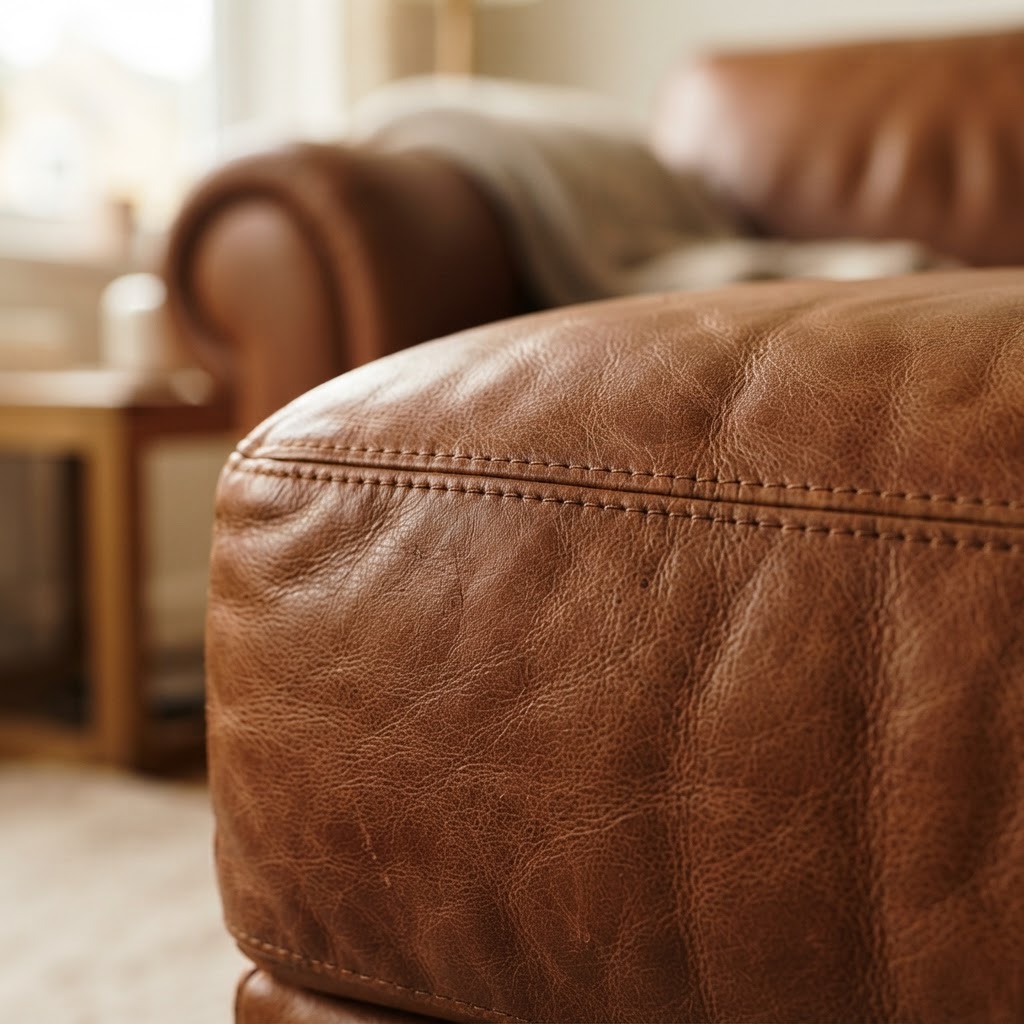
Professional Leather Cleaning
Professional cleaners use leather-specific products that won't damage or discolor furniture. Deep cleaning extracts soil without water damage. Protection treatments prevent future staining.
"Professional leather cleaning removes accumulated soil, restores color, and applies protective treatments—extending leather life significantly. It's the best investment for expensive leather furniture."
— Furniture Restoration Specialist
Leather Protection Strategies
Stain Guard Application
Professional-grade protection creates invisible barrier against spills. Allows time for cleanup before liquid penetrates.
Humidity Control
Maintain 30-50% humidity with dehumidifiers or humidifiers. Prevents cracking and crease marks.
Regular Conditioning
Conditioning replaces natural oils lost over time. Keeps leather supple and prevents cracking.
Strategic Placement
Keep leather away from heating vents, air conditioning, and direct sunlight. These all accelerate deterioration.